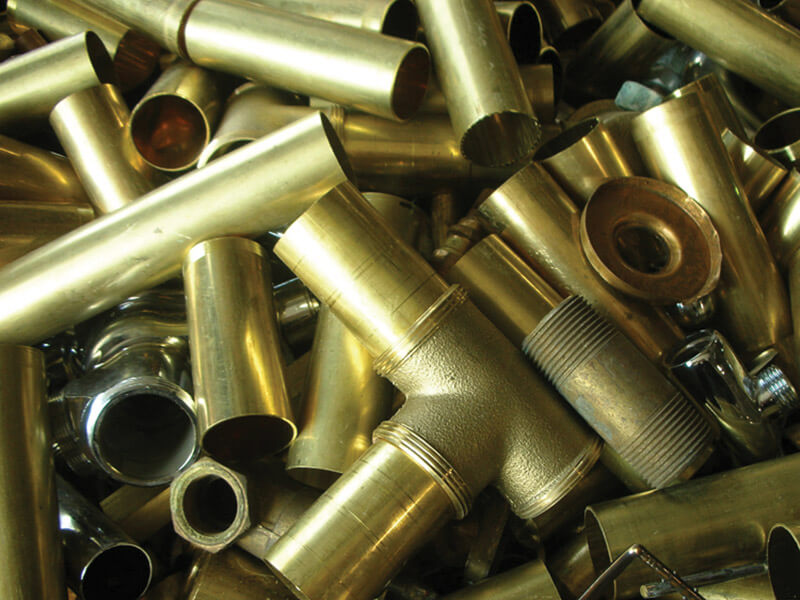
Brass is a versatile metal alloy composed primarily of copper and zinc. By adjusting the ratio of these metals, manufacturers can create different types of brass for a wide variety of applications. Brass is closely related to bronze, another copper-based alloy.
Known for its yellow-gold color, durability, malleability (ease of shaping), and non-sparking properties, brass is a popular choice in many industries. The addition of other metals can alter its color, hardness, and resistance to corrosion—some types of brass may even appear reddish, chocolate brown, or silver.
For professional brass recycling services in Minneapolis, MN, contact NRI Metals Recycling, serving the greater Twin Cities area.
Common Uses of Brass
Brass is widely used across multiple industries due to its durability and workability:
-
Decorative Applications: Furniture, fixtures, sculptures, and ornamental items.
-
Household Hardware: Keys, door handles, railings, and other frequently touched objects benefit from brass’s natural antimicrobial properties.
-
Construction and Plumbing: Pipes, fittings, and nuts are commonly made of brass.
-
Ammunition: Brass is the primary material for shell casings.
-
Musical Instruments: Its malleability allows intricate shapes, ideal for horns, cymbals, and other brass instruments.
Because of its extensive applications, brass is one of the most frequently recycled metals in the U.S.
How is Brass Manufactured?
Brass production typically involves:
-
Melting Copper and Zinc: Scrap copper (Cu) and zinc (Zn) ingots are combined in precise ratios.
-
Casting into Slabs or Billets: The molten alloy is poured into molds.
-
Shaping and Forming: Billets can be extruded, forged, rolled, or drawn into pipes, wires, sheets, or tubes.
This process allows manufacturers to create brass components in a wide range of shapes and sizes for commercial and industrial use.
Is Scrap Brass Valuable?
Yes, scrap brass has significant value. As a non-ferrous metal, it is priced per pound and typically falls in the mid-range of scrap metal rates. Brass is denser than metals like aluminum, meaning it’s easier to accumulate weight and value quickly.
Recycling brass not only provides financial benefit but also supports sustainable practices in manufacturing and industry.
Why Recycling Brass Matters
Brass is highly durable and does not degrade over time. If discarded in a landfill, it will remain indefinitely. Recycling brass:
-
Conserves Energy: Reduces the need for energy-intensive mining of new raw materials.
-
Reduces Waste: Helps prevent unnecessary accumulation of non-degradable metals in landfills.
-
Supports Sustainability: Brass can be recycled repeatedly without losing quality, unlike materials such as paper or plastic.
At NRI Metals Recycling, we accept all types of brass and ensure it is recycled responsibly, promoting environmental sustainability in the Twin Cities, Minnesota area.
Contact NRI Metals Recycling for Brass Recycling in Minneapolis, MN
Whether you have scrap brass, copper-zinc alloys, or brass fittings, NRI Metals Recycling can help you recycle efficiently and responsibly. Serving the greater Minneapolis and Twin Cities area, we make brass recycling easy, environmentally responsible, and financially rewarding.
Call NRI Metals Recycling today to recycle your brass and support sustainable metal use!